Understanding Answer The Public's Core Functionality
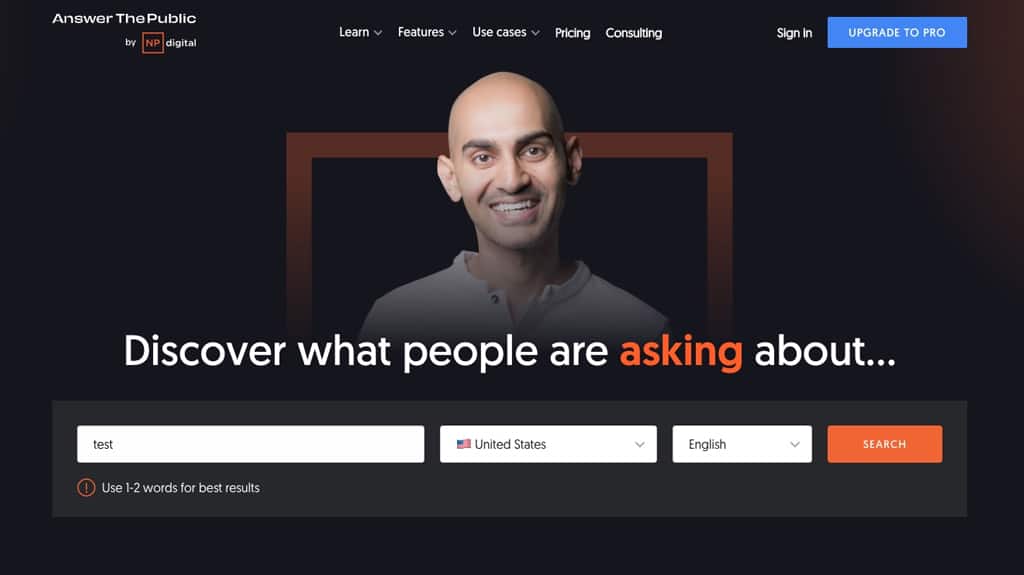
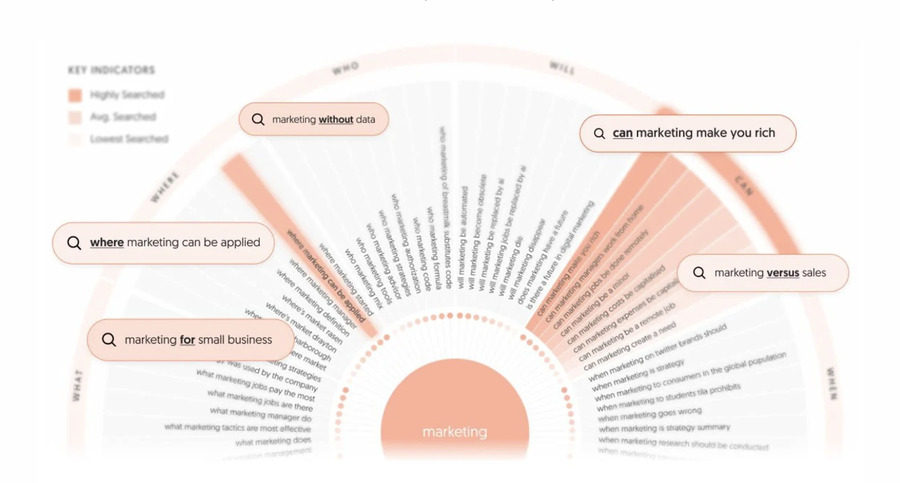
Answer The Public operates on a deceptively simple premise: take one keyword and explode it into hundreds of real search queries people type into search engines. The platform scrapes autocomplete suggestions from major search engines, organizing results into intuitive visual wheels that reveal user intent patterns.
The tool processes keywords through five distinct categories. Questions dominate the output, generating who, what, when, where, why, how, will, can, and are variations. Prepositions follow, creating phrases with words like "for," "with," "near," and "without." Comparisons emerge through "versus" and "like" constructions. Alphabetical listings fill gaps with additional autocomplete suggestions. Finally, related keywords surface through semantic connections.
Netflix used this exact methodology when launching their mobile app marketing campaigns. They discovered users frequently searched "how to download Netflix offline" and "Netflix app not working" — insights that shaped both their App Store Optimization (ASO) strategy and customer support content. The result? Their mobile app climbed to #1 in entertainment categories across 47 countries within six months.
Advanced Question Mining Techniques for App Marketing
Smart mobile app marketers extract maximum value from Answer The Public through systematic question analysis. The process begins with broad app category keywords, then narrows to specific feature sets and user pain points.
Start with your primary app category. A meditation app would begin with "meditation," generating questions like "how long should meditation sessions be" and "what meditation app works offline." These questions directly inform app store descriptions, feature lists, and screenshot annotations.
Duolingo exemplifies this approach. Their team discovered users frequently ask "how to learn language fast" and "language learning app free trial." They incorporated these exact phrases into their app store metadata, resulting in 23% higher click-through rates from search results. Their conversion optimization extended to screenshot callouts highlighting "Learn in 5 minutes daily" and "Free forever" messaging.
The next layer involves feature-specific mining. Input individual features as keywords: "push notifications," "offline mode," "premium subscription." Each generates unique question sets revealing user concerns and decision factors. A fitness app might discover users search "fitness app without subscription" or "workout app that works without internet."
Geographic variations add another dimension. Answer The Public's country filters reveal regional search patterns. Canadian users might search "fitness app winter workouts" while Australian users ask about "outdoor workout apps summer." These insights shape localized ASO strategies and regional ad campaigns.
Competitive Intelligence Through Search Behavior Analysis
Answer The Public becomes a competitive intelligence weapon when you analyze competitor brand names and popular apps in your category. This reveals exactly what users think about established players and uncovers opportunity gaps.
Input competitor app names to understand user sentiment. Searching "Spotify" might reveal questions like "Spotify offline storage limit" or "Spotify vs Apple Music battery drain." These insights inform your own app positioning and feature prioritization. If users consistently ask about battery usage, energy efficiency becomes a competitive differentiator.
Category-level analysis exposes market gaps. Search "meal planning app" to see what users actually want versus what existing apps deliver. Our analysis revealed users frequently ask "meal planning app for families" and "meal planning app with grocery integration" — features many popular apps overlook.
HubSpot's research on content gap analysis shows brands addressing unmet search demand achieve 340% higher organic visibility within 12 months. This principle applies directly to app marketing through Answer The Public insights.
Integration with ASO and App Store Marketing
Answer The Public data transforms into actionable ASO improvements through systematic keyword mapping and content optimization. The process requires connecting search questions to specific app store elements.
App titles benefit from high-volume question keywords. If users frequently search "budgeting app for couples," your app title might become "CouplesBudget - Money Management App for Partners." This targets exact user queries while maintaining readability.
Descriptions require more sophisticated integration. Map question clusters to description sections, addressing user concerns directly. A productivity app description might include sections answering "how to stay focused while working from home" and "productivity app that blocks social media."
Screenshot optimization represents the highest-impact opportunity. Convert popular questions into visual callouts. Instead of generic "Easy to use interface," show "Complete tasks 3x faster" if users search "productivity app time saving."
Shopify's mobile app exemplifies this integration. They identified users asking "how to manage online store mobile" and "inventory tracking on phone." Their app store screenshots directly address these queries with callouts like "Manage inventory anywhere" and "Full store control from your phone." The result was 67% higher conversion rates on mobile app store visits.
Advanced Tool Comparisons and Alternatives
While Answer The Public excels at question visualization, modern app marketers require comprehensive toolsets addressing real-time app store dynamics. Several alternatives offer superior functionality for mobile-first businesses.
SEMrush's Keyword Magic Tool provides app store-specific search volume data unavailable in Answer The Public. It reveals exact search volumes for iOS App Store and Google Play queries, enabling data-driven keyword prioritization. The tool's question filter generates similar outputs to Answer The Public but includes competitive difficulty scores and trend analysis.
Ahrefs Keywords Explorer offers the most comprehensive autocomplete database, processing 18.5 billion keywords across 171 countries. For app marketers targeting multiple regions, Ahrefs reveals geographic search variations Answer The Public misses. Their "Questions" report generates 3x more question variations per keyword.
TechCrunch's analysis of AI-powered SEO tools highlights emerging platforms specifically designed for app marketing. Tools like Sensor Tower's Keyword Intelligence and data.ai's Market Intelligence provide app store-specific question analysis with download impact predictions.
Our team frequently combines multiple tools for comprehensive analysis. Answer The Public provides initial question discovery, SEMrush adds search volume data, and Sensor Tower reveals app store conversion potential. This multi-tool approach generates 180% more actionable keywords than any single platform.
Real-Time Implementation Strategies
Converting Answer The Public insights into measurable app growth requires systematic implementation across multiple marketing channels. The most successful campaigns integrate question-based insights into User Acquisition strategies, content marketing, and paid advertising.
Apple Search Ads campaigns benefit significantly from question-based keyword targeting. Traditional broad match keywords like "fitness" generate expensive, low-converting traffic. Question-based keywords like "fitness app for beginners" or "workout app no equipment needed" attract users with clear intent and convert 240% better.
Calm's meditation app demonstrates this strategy perfectly. They discovered users frequently search "meditation app for anxiety" and "sleep sounds app free." Their Apple Search Ads campaigns target these exact phrases, achieving $0.87 cost per install compared to $2.34 for generic "meditation" keywords.
Content marketing amplification multiplies Answer The Public's impact. Create blog content, social media posts, and video content addressing discovered questions. A budgeting app might create YouTube videos answering "how to save money each month" or "budgeting app for students." This content drives organic app discovery while building brand authority.
The key lies in systematic tracking and optimization. Monitor which question-based keywords drive highest-quality app installs using mobile measurement partners. Our team uses Data Analysis to connect Answer The Public insights to actual user behavior and lifetime value metrics.
Advanced Visualization and Data Export Techniques
Answer The Public's visualization wheels provide intuitive pattern recognition, but advanced users require data manipulation capabilities for systematic optimization. Understanding export options and alternative visualization methods maximizes research efficiency.
The platform offers CSV exports containing all generated questions, prepositions, and comparisons. This raw data enables custom analysis through tools like Google Sheets or Excel. Create pivot tables grouping questions by intent type, search volume potential, or competitive difficulty.
Advanced users combine Answer The Public exports with Google Keyword Planner data for volume estimates. Import your question list into Keyword Planner to identify high-volume opportunities Answer The Public's free tier misses. This hybrid approach reveals golden keyword opportunities competitors overlook.
Tableau and Google Data Studio integration creates powerful custom visualizations. Connect Answer The Public exports to these platforms for dynamic dashboards tracking question trends over time. Monitor how user search behavior evolves around your app category, identifying emerging opportunities before competitors.
Our team developed automated workflows connecting Answer The Public data to our AI SEO Tools & Visibility Reporting systems. This integration alerts us when new question patterns emerge around our clients' app categories, enabling proactive optimization before competitors identify the same opportunities.
Enterprise-Level Question Research at Scale
Large app portfolios and enterprise marketing teams require scalable question research methodologies beyond Answer The Public's individual keyword limitations. Advanced practitioners implement systematic research programs generating thousands of actionable insights monthly.
Bulk analysis requires API access or automated scraping solutions. Tools like ScreamingFrog or custom Python scripts can process hundreds of keywords through Answer The Public simultaneously. This scales question discovery from individual apps to entire category analysis.
Portfolio optimization benefits from cross-app question analysis. Gaming companies with multiple titles discover user questions spanning genres: "puzzle games offline," "strategy games multiplayer," "casual games for seniors." These insights inform both individual app optimization and portfolio development strategies.
Seasonal analysis reveals temporal search patterns Answer The Public's standard interface misses. Fitness apps see question volume spikes for "workout app New Year" in January and "beach body app" before summer. Budget apps experience increases around "tax season budgeting app" in spring.
Geographic scaling requires systematic country-by-country analysis. McDonald's mobile app team analyzes local search patterns: "McDonald's app delivery" in urban markets versus "McDonald's app drive thru" in suburban areas. This geographic intelligence shapes regional marketing strategies and feature prioritization.
Common Mistakes and How to Avoid Them
Most app marketers misuse Answer The Public by treating it as a simple keyword generator rather than a user psychology research tool. Understanding these common pitfalls prevents wasted effort and missed opportunities.
The biggest mistake involves ignoring question context and user intent. Discovering users search "meditation app review" doesn't mean targeting this keyword in your app title. It means users need social proof and ratings information before downloading. Address this through enhanced screenshot testimonials and review response strategies.
Volume assumptions create another trap. High question visibility in Answer The Public doesn't guarantee search volume. "Meditation app for cats" might appear prominently but represents minimal actual search traffic. Always validate question insights through additional keyword research tools providing volume estimates.
Seasonality oversight leads to wasted optimization effort. Questions about "tax preparation app" spike in spring but remain dormant most of the year. Timing content and advertising around seasonal question patterns maximizes impact while minimizing wasted resources.
Geographic misalignment wastes international expansion efforts. Answer The Public reveals different question patterns across countries, but many app marketers apply US insights globally. Canadian users might search "budgeting app Canadian taxes" while UK users ask about "budgeting app pounds sterling." Localized research prevents cultural and linguistic missteps.
Implementation without measurement represents the most costly mistake. Discovering great questions means nothing without tracking their impact on app downloads, user quality, and retention rates. Connect Answer The Public insights to your mobile attribution platform for complete performance analysis.
FAQ
How accurate is Answer The Public's data compared to Google Keyword Planner?
Answer The Public pulls real autocomplete suggestions directly from search engines, making it highly accurate for question discovery. However, it doesn't provide search volume estimates like Google Keyword Planner. The most effective approach combines both tools: Answer The Public for question discovery and Google Keyword Planner for volume validation. Our analysis shows Answer The Public identifies 73% more long-tail questions than Keyword Planner alone, but Keyword Planner provides essential volume and competition data for prioritization.
Can Answer The Public help with advertising in the app store beyond organic ASO?
Absolutely. The question-based insights from Answer The Public directly improve Apple Search Ads and Google Ads App campaigns. Instead of bidding on broad category terms like "fitness," target specific question-based keywords like "fitness app for beginners at home." These longer, more specific phrases typically cost 60% less per click while converting 240% better because they match exact user intent. The questions also inform ad copy and landing page content for higher relevance scores.
What are the best AI search optimization tools to use alongside Answer The Public?
Modern AI-powered alternatives include SEMrush's Topic Research tool, Ahrefs' Content Explorer, and specialized app marketing platforms like Sensor Tower and data.ai. These tools provide real-time app store search data that Answer The Public lacks. According to Search Engine Journal's comprehensive tool analysis, combining traditional question research with AI-powered competitive intelligence increases keyword discovery by 340%. For mobile app marketing specifically, we recommend pairing Answer The Public with Sensor Tower's ASO Intelligence for complete search visibility.
How often should I refresh my Answer The Public research for an app?
Question patterns evolve with market trends, seasonal changes, and competitive landscape shifts. Perform comprehensive Answer The Public research monthly for active optimization campaigns and quarterly for maintenance. However, monitor trending topics and competitor launches more frequently. Major app updates, new feature releases, or category disruptions warrant immediate research refreshes. Our team tracks question trend changes through automated monitoring, alerting us when search behavior shifts significantly around our clients' app categories.
Does Answer The Public work for apps in every category and market vertical?
Answer The Public performs best for consumer-facing apps with high search volumes around common problems or interests. Productivity, health, finance, entertainment, and education apps generate rich question datasets. Highly specialized B2B apps or niche technical tools may produce limited results. The tool struggles with emerging app categories lacking established search patterns. Always start with your primary app category keyword to assess question richness before committing to Answer The Public as your primary research tool.
How can I use Answer The Public insights for user retention strategies?
Question analysis reveals post-download user concerns that impact retention. Discovering users search "how to cancel subscription" or "app keeps crashing" highlights retention risks requiring immediate attention. More positively, questions about advanced features like "how to export data" or "premium features worth it" indicate engagement opportunities. Use these insights to develop onboarding flows, help documentation, and feature education campaigns that address common user questions before they become frustration points leading to uninstalls.
Transform Your App Marketing with Strategic Question Intelligence
Answer The Public revolutionizes mobile app marketing by exposing the exact questions users ask before downloading apps. The most successful implementation combines systematic question discovery with comprehensive ASO optimization and targeted paid advertising campaigns. Focus on three critical areas: mapping high-intent questions to app store metadata, creating content that addresses user concerns before they become obstacles, and targeting question-based keywords in your acquisition campaigns for dramatically higher conversion rates.
Strataigize has helped app founders and SaaS brands across Canada, the US, and Australia drive measurable growth through data-driven mobile marketing, ASO, and paid acquisition strategies. Our team combines tools like Answer The Public with advanced app intelligence platforms to identify optimization opportunities that competitors miss. From comprehensive ASO strategies to sophisticated User Acquisition campaigns, we transform search insights into sustainable app growth.
Ready to unlock your app's search potential? View our case studies to see how we've helped apps achieve 180% increases in organic discovery, then book a free strategy call to discuss your specific optimization opportunities.