Rork Raises $15M to Replace Xcode: What the Rise of Vibe Coding Means for the App Economy
Rork, the AI platform that converts natural language prompts into fully functional mobile apps, just announced a $15 million seed round led by Left Lane Capital, with participation from Peak XV Partners, True Ventures, Goodwater Capital, and existing investor Andreessen Horowitz’s Speedrun program.
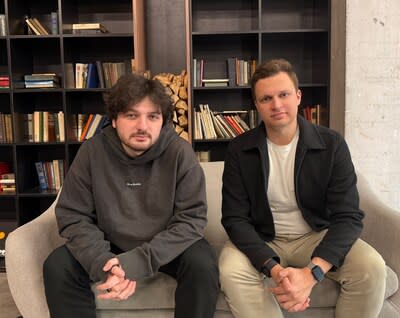
That’s a massive step up from the $2.8 million they raised through a16z Speedrun back in mid-2025, which itself came out of one of the wilder startup origin stories in recent memory where co-founders Daniel Dhawan and Levan Kvirkvelia were each carrying $15,000 in credit card debt and running on fumes when a single viral tweet about Rork turned everything around almost overnight.
The company has been on a tear since then. Their Rork Max launch pulled in over 8 million views on X and doubled the company’s annual revenue in the span of two weeks, and they’ve since acquired Paperline, a macOS-based AI tool for native Swift development, to push even deeper into native app building capabilities.
Why Rork Max Changes the Conversation
The fundraise itself is interesting, but Rork Max is the product that actually makes this story worth paying attention to if you operate anywhere in the app economy.
Rork Max is a browser-based development environment where you describe the app you want in plain English, and the platform handles everything from there. It generates real Swift code, compiles it on cloud-hosted Mac infrastructure, streams a live simulator with real-time touch input back to your browser, and then prepares the entire build for App Store submission. We’re talking full coverage across Apple’s ecosystem here, including iPhone, iPad, Apple Watch, Apple TV, Vision Pro, and iMessage apps, all from a browser window.
Under the hood, the platform runs on Claude Code and Claude Opus 4.6 for its AI generation layer, and it’s going after something that most AI coding tools have deliberately avoided up until now: native mobile app development.
Competitors like Lovable and Bolt made smart plays in the web development space, but Rork’s founders recognized that mobile was both the harder problem and the more valuable one since building native mobile apps is roughly ten times more complex than web development, and nobody had really cracked it with AI yet.
That complexity gap is actually what makes Rork Max significant. Most cross-platform AI app builders have relied on web wrappers or generic runtimes that cap your performance and lock you out of Apple’s latest APIs.
Rork Max generates native SwiftUI with full access to Apple’s frameworks, including AR, 3D rendering, widgets, Live Activities, and Siri integrations, which is a fundamentally different output than what the web-focused tools have been producing.
And the ambition goes beyond just generating code. Rork Max is trying to abstract away the entire Xcode workflow, including the code signing, provisioning profiles, and TestFlight distribution steps that have traditionally required dedicated iOS expertise.
If the platform delivers on that promise consistently, you’re looking at a world where someone with a good idea and zero development experience can go from concept to live App Store listing without ever opening a terminal.
Vibe Coding Is Graduating from Novelty to Infrastructure
Rork’s raise doesn’t exist in a vacuum. It’s part of a much larger shift that’s been building momentum throughout 2025 and accelerating into 2026, one that people have started calling “vibe coding,” where builders describe what they want in natural language and AI systems handle the actual code generation behind the scenes.
A year ago, most of this lived in the “cool demo” category. You could generate a basic landing page or a simple web app, and it was impressive in a novelty sense, but nobody was shipping serious products this way.
What’s changed is that the tools have caught up to the ambition.
Platforms like Lovable and Bolt proved that AI-generated web applications could be genuinely useful, and now Rork is making the case that the same approach works for the far more demanding surface of native mobile development.
The $15M raise is essentially the market saying “we believe this is real.” Left Lane Capital, Peak XV, True Ventures, Goodwater, and a16z are not writing checks on hype alone, and the fact that they’re backing a mobile-first AI development platform at this scale tells you something about where institutional money thinks the category is headed.
How This Reshapes the Competitive Landscape
The downstream effects of this shift are going to be felt across the entire app economy, and probably sooner than most people expect.
When you collapse the time and cost required to build a functional app from months and six figures down to days and a subscription fee, the natural result is that every app category gets significantly more crowded.
Niches that used to be protected by sheer technical complexity, the kind where you needed a specialized iOS team and deep Apple toolchain knowledge just to get something functional, are suddenly accessible to anyone with a clear idea and the ability to describe it in a few paragraphs.
Consider what that looks like in practice. Say you’ve spent six months building a fitness app and you’ve got a decent head start on the market.
In the old world, that development timeline was itself a form of competitive protection because anyone who wanted to compete had to invest the same time and resources.
In a vibe coding world, someone can look at your App Store listing, describe a similar concept to Rork Max, and potentially have a competing product live within weeks. Your moat just evaporated.
And this dynamic isn’t limited to mobile apps. If AI can abstract away Xcode today, it will eventually abstract away the complexity of building SaaS products, internal tools, and enterprise software too. Feature advantages become increasingly temporary when the cost of replicating functionality keeps dropping.
All of which means that the real competitive advantages are migrating toward everything that happens after the product ships.
Your App Store Optimization strategy, your user acquisition playbook, the retention loops you build into the product experience, your data infrastructure for understanding user behavior, and the organic search presence and conversion optimization work you put into your web properties are what separate sustainable businesses from apps that launch and disappear.
When building the product is no longer the bottleneck, the companies that own their distribution and have genuine brand equity are the ones with staying power.

The Questions Nobody Has Answered Yet
For all of Rork’s momentum, there are real open questions that the market still needs to work through before we can call this a settled category.
The biggest one is whether AI-built apps can actually hold up at production scale. It’s one thing to generate a clean demo or a functional MVP, and it’s a completely different challenge to produce code that handles millions of users, survives App Store review edge cases, adapts gracefully when Apple updates its APIs, and remains maintainable over years of iteration. Rork Max may well get there, but the proof points across a large volume of real-world, revenue-generating apps aren’t fully established yet.
There’s also the Apple question, which looms large over any company building developer tools for the iOS ecosystem.
Apple has every incentive to ship AI-assisted development features directly inside Xcode, and if they do, platforms like Rork would be competing against the company that literally controls the underlying platform.
Apple has a long history of absorbing the functionality of third-party tools into its own ecosystem, and anyone building a business on top of iOS developer infrastructure has to factor that risk into their long-term strategy.
And then there’s the code ownership and vendor dependency issue.
If you build your entire app through Rork Max, can you fully export, refactor, and maintain that codebase independently?
What happens if Rork changes its pricing, pivots its product direction, or goes under? These aren’t hypothetical concerns. They’re practical questions that any serious founder needs answered before going all-in on a platform like this for their core product.
None of these questions take away from what Rork has accomplished or where the category is clearly headed. They do suggest that the smartest approach right now is to use vibe coding tools as powerful accelerators for speed and iteration while continuing to invest in the marketing, distribution, and operational fundamentals that actually sustain an app business over time.
Where This All Lands
Rork’s $15M raise marks the moment where AI-powered mobile development crossed from “interesting experiment” into “institutional-grade category.”
The investor roster alone signals that serious money sees this as a durable shift in how software gets built, not a passing trend.
For anyone building or growing in the app economy, the practical takeaway is that the technical barriers which used to protect your position in the market are eroding quickly, and they’re not coming back.
The ability to ship an app is becoming commoditized, which means the companies that build lasting competitive advantages from here will be the ones that invest deeply in how they go to market, how they acquire and retain users, and how they build brands that mean something beyond a feature list.
The app itself was never the whole business. But now that reality is impossible to ignore.
If you’re looking to build the kind of marketing and distribution engine that actually holds up in a market where anyone can ship an app, our team works with mobile app companies every day on exactly this problem through our mobile app marketing practice.
Book a free strategy call and let’s talk about what sustainable growth looks like for your app.