
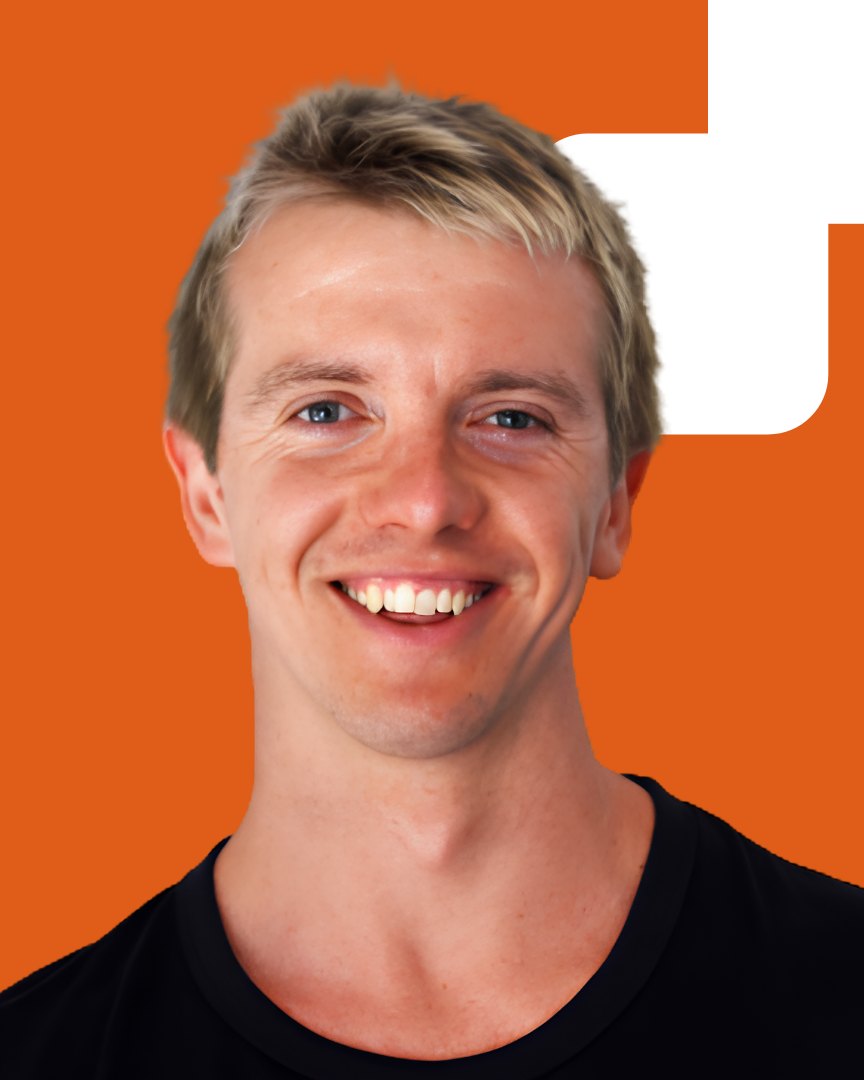
Chief AI Scientist
Eric Hedlin, PhD
Signs off every AI system so it holds in production, with a baseline, not a demo that dies on Monday.

Eric Hedlin is Strataigize's Chief AI Scientist. He holds a PhD in computer science from the University of British Columbia, supervised by Kwang Moo Yi in the UBC computer vision group, and an MSc from UBC on human pose estimation. His doctoral work asked a practical question: how much can a large pretrained model do for a new visual task before anyone labels a single example? The answers were published as first-author papers at NeurIPS 2023 (Unsupervised Semantic Correspondence Using Stable Diffusion), CVPR 2024 (Unsupervised Keypoints from Pretrained Diffusion Models, selected as a Highlight) and CVPR 2025 (HyperNet Fields, written with co-authors at Qualcomm AI Research), with a 2025 paper in ACM Transactions on Graphics. The code is public through UBC Vision, and his research background runs through that group and Qualcomm's perception research team in San Diego.
At Strataigize the job is reliability. He decides which model a workflow needs, when a smaller one will do, how a system is evaluated against a labelled set before it touches production, and what a person still has to approve. That is the difference between a demo and a system a client can run, and it is why each system in our catalogue is scoped as one bounded workflow with a measured baseline and a supervised go-live. He leads the computer vision line directly.
Before research, he swam for Canada for twelve years. He won silver in the 5 km open water at the 2013 World Championships in Barcelona and bronze at the 2019 World Championships in Gwangju, took silver in the 10 km at the 2018 Pan Pacific Championships, and was Swimming Canada's Male Open Water Swimmer of the Year in 2018. At the University of Victoria he set U SPORTS records in the 1500 m freestyle and received the President's Cup for combining academics and athletics. Twelve years of racing ten kilometres in open water teaches a particular discipline: prepare in writing, measure the baseline, and trust nothing that has not been tested in real conditions. It is how he builds.
Selected publications
- Unsupervised Semantic Correspondence Using Stable DiffusionNeurIPS 2023
- Unsupervised Keypoints from Pretrained Diffusion ModelsCVPR 2024, Highlight
- HyperNet Fields: Efficiently Training Hypernetworks without Ground Truth by Learning Weight TrajectoriesCVPR 2025
- NESI: Neural Explicit-Shape-Intersection-Based Geometry RepresentationACM Transactions on Graphics, 2025
Elsewhere Google ScholarResearch siteTeam Canada profile
Focus areas
Work with our team.
Book a free growth audit and meet the people who’ll run your growth.
Book a growth audit → Rated 5.0 on Clutch