Home / Services /
HubSpot & CRM Implementation
A CRM that knows where the lead came from.
Connect your forms, lead-source fields and deal reporting. We configure HubSpot so your team can follow an enquiry from its recorded source through qualification and a
Overview
Keep the lead source with the deal.
A lead can arrive through an ad, a form or a referral, then spend months in the sales process. If its original source is missing or overwritten, the closed-deal report cannot explain which activity brought it in. We trace those fields through the journey before changing
We fix that at the wiring level. Forms carry the identifiers, the identifiers are stored as real queryable properties, conversions are sent server-side, and the qualified and closed stages are exported back to the ad platforms so bidding learns from outcomes instead of
Our own HubSpot setup uses this pattern: click identifiers are stored in reportable properties, not only in the page URL. The reporting pipeline renders 17 client reports per cycle and halts if a run would publish fewer measured facts for a client than the
The scope: this is measurement-led CRM work. The data model, the wiring, the attribution and the reporting. It pairs directly with analytics and server-side tracking, and it is what makes LinkedIn and Google Ads optimizable against pipeline. If what you need is workflow automation on top of the CRM, that is our AI workflow automation line.
How it works
From guessed source to traceable revenue.
Audit
What the CRM currently records, what it silently drops, and which reports are built on
Model
Objects, lifecycle stages and properties agreed in writing before anything
Wire
Forms, click identifiers and server-side conversions connected so the source survives to
Report
Attribution and pipeline reporting built on the
Feed back
Qualified and closed stages exported back to the ad platforms so bidding learns from
Case studies
Measurement work, with the receipts.
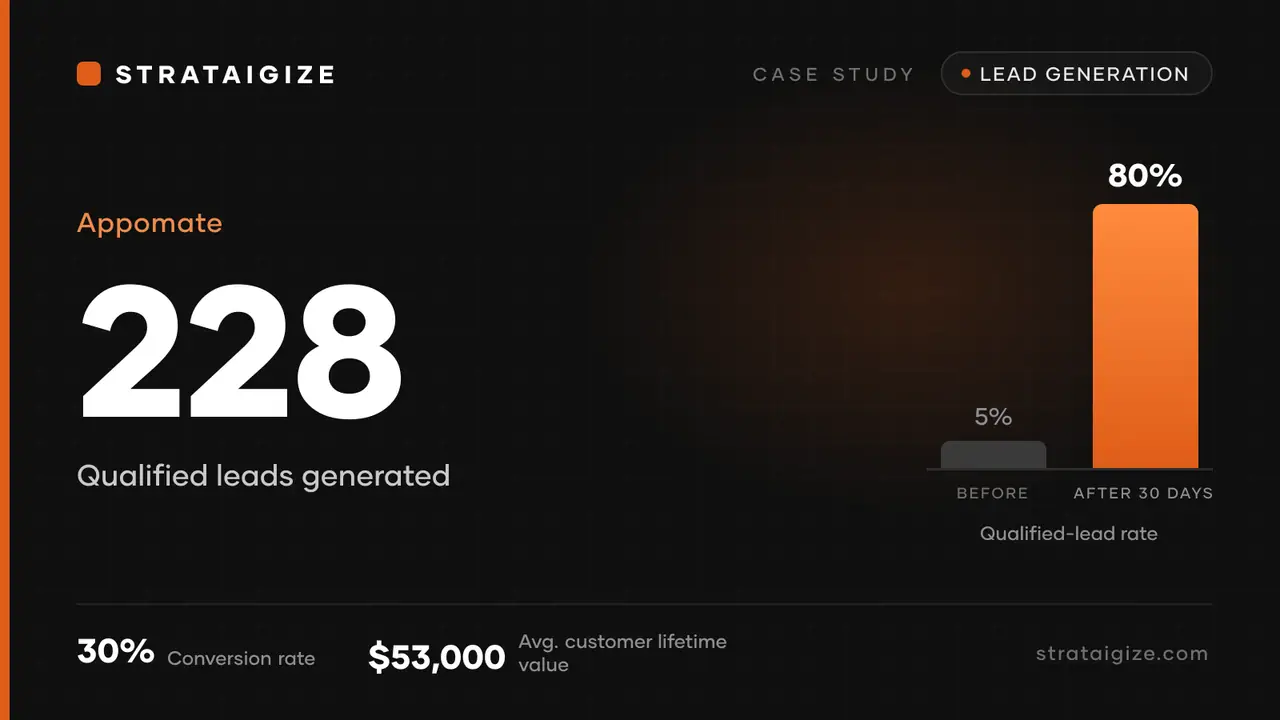 5% to 80%Qualified share of leads, in 30 days
Appomate
Appomate: From 5% Qualified Leads to 80% in 30 Days
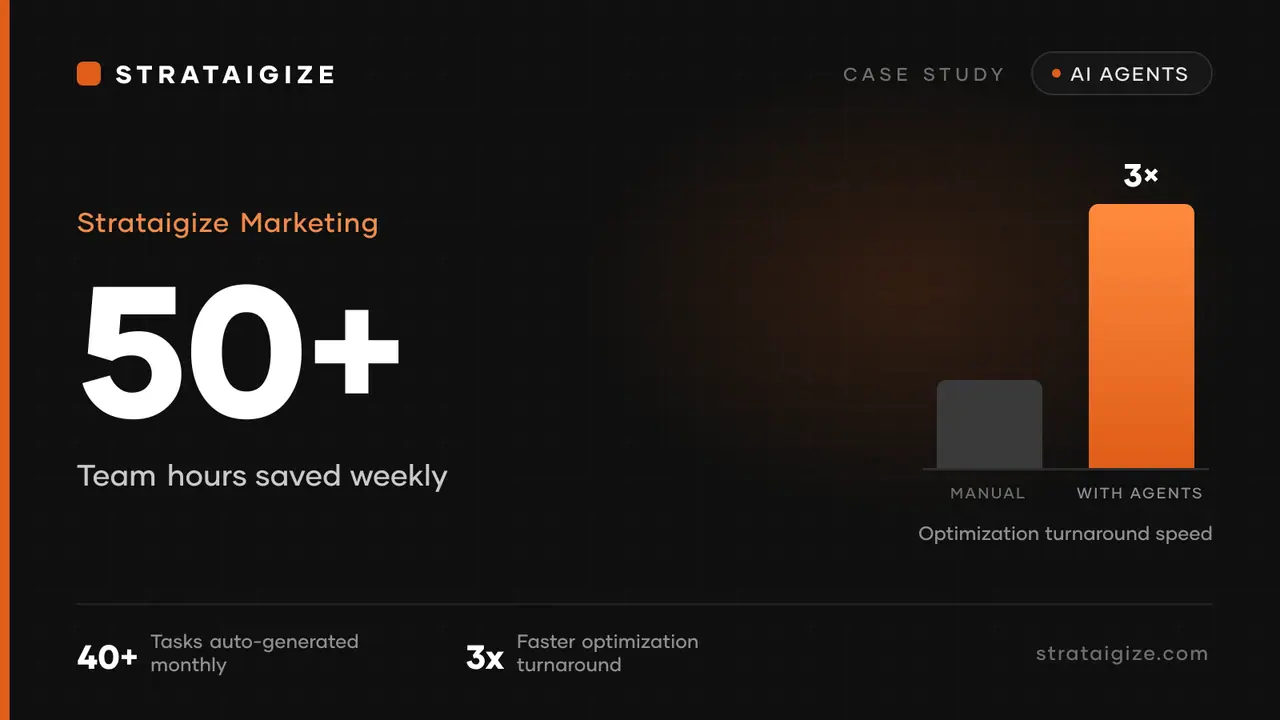 50+Estimated team hours saved weekly
Strataigize Marketing
How Our Marketing Agency Uses AI Agents to Automate Busywork
Questions
HubSpot and CRM, answered.
What does a HubSpot implementation involve?
Our CRM data is a mess. Where do you start?
Why does the CRM need click identifiers?
Do you do sales enablement and CPQ too?
What does this cost?
What we do
Every piece of work, named.
Every line item opens into the artifact you receive, the typical duration, and the role that
Data model
CRM audit
Object and lifecycle design
Property build
Deduplication and hygiene rules
Wiring
Form and landing page integration
Server-side conversion feeds
Offline conversion export
Consent and suppression handling
Reporting
Attribution reporting
Pipeline and velocity views
Channel reconciliation
Handover documentation
Teams we've




 Kleo
Kleo

 Goodwill
 GameGo

 Hino Motors
 Sad Panda Studios




 StoryNest
 Blush Blush
 Stoic Forge
 Beyond Score
 MyPetHealth
 TaskHive
 Sincere Notes
 Voices in my Head
 Black Top Cabs


 BeNow Trader
 Crystalyze
 24/7 AI Health
 Aero Imagery
 RepairFind
 Prepr
Prepr

 Guiding Light
 Freestyle Dance Studio
 First Step Mobility
 Noa Coach
Website optimization from $4K per month, typical range $4K to $10K. Rebuilds can be
Real ranges, published. Ad spend stays in your
Where this fits: see the Strataigize Growth System, the ladder every engagement
Talk to the measurement team
Share your website or app URL. We reply within 24 hours with a suggested starting point and what we need to scope
Find out what your CRM is not recording.
On a free 30-minute consultation, we discuss the reporting question your CRM cannot answer and the records needed to
Measurement is the other half of this: see analytics and server-side tracking.
Rated 5.0 on Clutch