A $30 Budget and Empty Class Spots
The amounts in this study are historical advertising spend for this campaign. They are not service fees or current
The first week’s ad budget was $30. A local dance studio in El Salvador needed to fill more class spots and lift revenue, and that was the money available: $30 in week one, $88 in week two, and around $220 across the
With no complex funnel or big marketing stack, they relied on paid social advertising to help real parents discover the studio, reach out easily, and book trial classes that could turn into
We Built the Whole Funnel Inside WhatsApp
The studio partnered with us to run a Meta strategy focused on ROI, turning small budgets into real conversations and
1. An engagement campaign with one clear ask. The studio ran a Meta engagement campaign with a clear call to action: ads that invited people to send a message directly to the studio’s phone. No website, no form. Every interaction was built to become
2. WhatsApp as the core sales channel. In their market, WhatsApp is where people talk and close deals, so the funnel was built around it. Ads encouraged people to message the studio, an AI chat tool auto-responded to and optimized replies, and a small CRM tracked who messaged, who booked a free trial, and who converted to a monthly subscription. Your version of that channel might be a phone number, a direct message, or a walk-in. The point is to put the funnel where the conversation
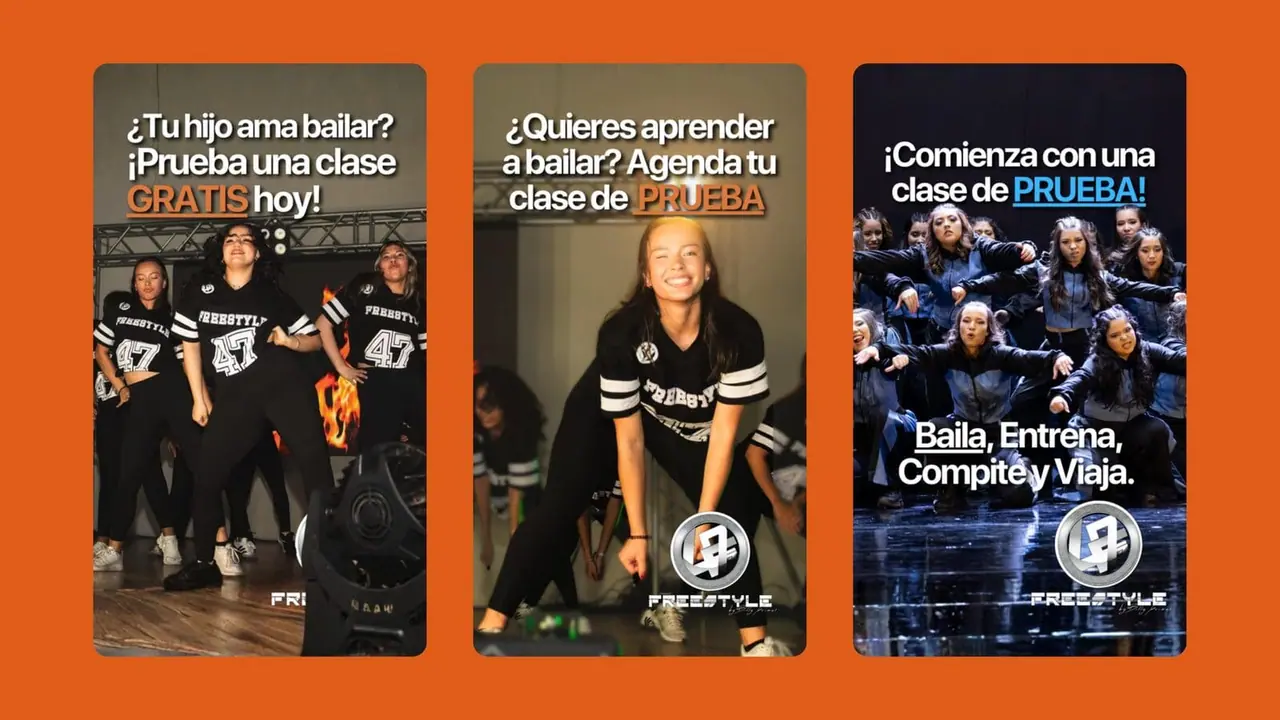
3. Simple, proof-driven creative. The studio used only three assets: one video, one static, and one Instagram post featuring students dancing on a well-known TV show. The video clearly outperformed the others and drove the most messages. It was instant
4. Targeting parents on the right platform. More messages came from Facebook than Instagram, because the target was parents and, in this region, older audiences use Facebook more. Since students usually stay for at least five years, targeting parents looking for kids’ classes meant higher-quality, longer-term customers. The platform your buyer lives on is often a different one from the platform you spend your own
$220 of Ads Filled the Classes
Over roughly one month, the campaign delivered 350 total messages from real parents, from which 50 people booked free trial classes and 16 signed up for monthly subscriptions at around $80/month, roughly $1,280 in new monthly revenue, on a total ad spend of
The campaign ended because demand outpaced capacity, with performance still holding up when it stopped. In the last week, the studio was telling new leads they were full, yet still secured at least 25 appointments for January before pausing ads to prepare a Christmas show. A ~$220 test ended with classes filled, a waitlist for the next month, and a repeatable, message-first funnel ready to turn
“We only invested around $220 and got over 350 messages, 50 trial bookings, and 16 new monthly students. By the last week, we were telling people we were full and booking them for January instead. This campaign increased our revenue by at least a thousand dollars a month, and we had to pause ads because we literally couldn’t take
more students.” Billy G., Freestyle
Dance Studio
Start Where Your Customers Already Talk
This campaign shows what happens when a small local business builds around real behavior (WhatsApp and Facebook for parents), uses simple creative, keeps the funnel short (ad to message to trial to subscription), and tracks outcomes even with a scrappy CRM. For a tiny, family-run studio, a one-month, ~$220 experiment turned into a surge of 350+ conversations, 50 trial classes, 16 monthly subscriptions, 25+ future appointments, and a real revenue lift of $1,000+ per month. If you run a business like this one, start from where your customers already have conversations, then count the steps between your ad and one of those conversations. Taking steps out is most of the trick at