Home / Services /
Ecommerce SEO
Rank the pages that carry margin.
Search work for the collection and product pages that carry margin. The problems that hide those pages get
The short version.
We prioritize collection and product pages using search demand, margin and order data, then address the technical and content problems that
- Fix the technical floor with technical SEO.
- Turn more of those visits into orders with conversion work.
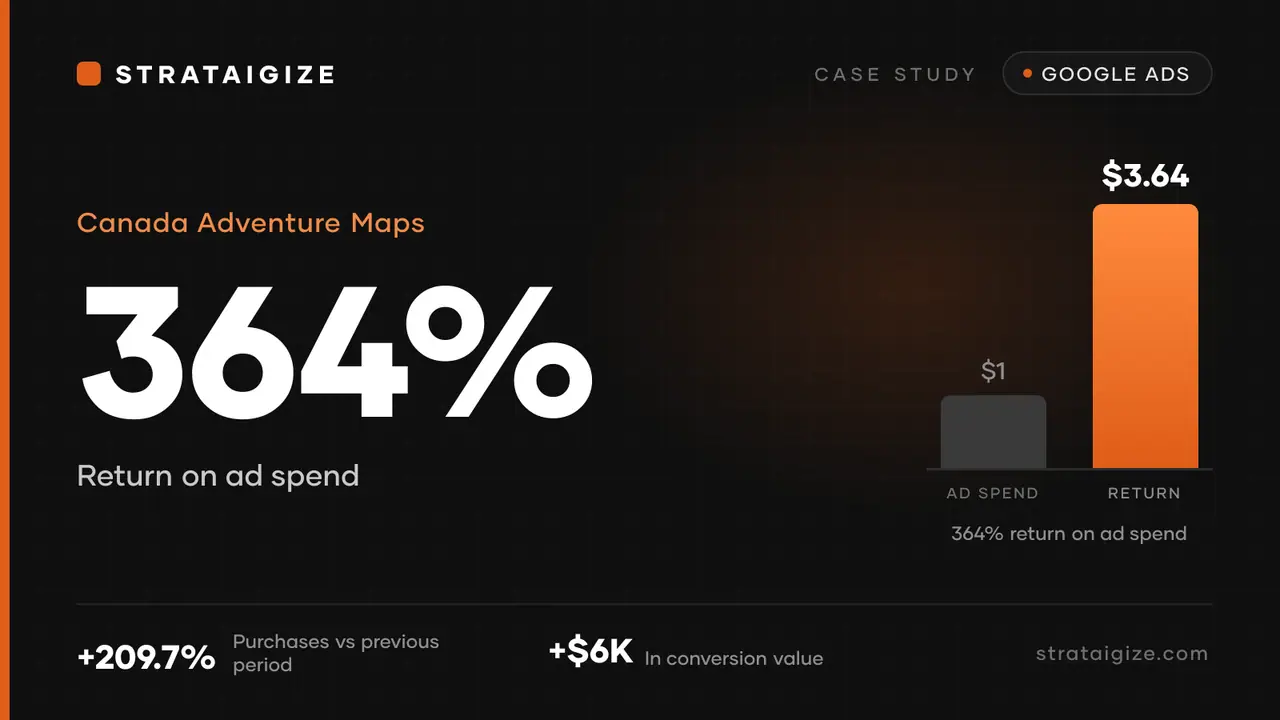
- Backroad Mapbooks: related ecommerce acquisition work, with paid-channel results rather than an organic SEO case.
The loop, start to finish.
We clear the structure that hides product pages, then work on the pages that
Step 01
Margin map
Collections and products ranked by margin and by orders, then set next to
Step 02
Architecture clean-up
Filter, variant and collection URLs are reviewed for appropriate indexing and canonical rules, while distinct useful pages
Step 03
Collection copy
Category pages rewritten for the comparison a buyer is making, with structured data that matches
Step 04
Internal linking
Navigation and cross-links built so the pages that earn get
Step 05
Revenue read
The report leads with orders from search on the pages
Rankings that show up in orders.
Prioritize commercial relevance
We identify collections and products with useful demand and viable margins, then prioritize their content and
Maintain the catalogue structure
Canonical rules and internal links help manage duplicate URLs. New products, filters and platform changes need
Judged on revenue
The scoreboard is organic revenue on the pages we worked, not sessions, so a ranking gain has to pay before
Done for you.
Catalog architecture
Collection and product pages arranged so search can reach the ones
Margin-first prioritisation
The words you target, ranked by margin and by orders, ahead of raw
Product and offer schema
Structured data for price, availability, and reviews, checked in

Ecommerce SEO, answered.
Do you work on Shopify?
Yes, and on other platforms. Shopify repeats collection and product URLs. We fix that with canonicals and
Should we start with collections or blog content?
We assess collection and product pages first because they directly support shopping decisions. Useful guides and comparison content can support them. The priority depends on demand, existing coverage and
How do you pick which products to work on?
By margin and by orders, set next to search demand. A popular word on a low-margin product is a
What does this cost?
Website optimization starts at $4K per month with a typical range of $4K to $10K, published on our pricing page. Scope and page count move it inside
Related services.
AI SEO & Visibility Reporting
A weekly check of ChatGPT, Claude, Gemini, and Google. Perplexity is
Conversion Rate Optimization
Help more of the right visitors become customers through focused improvements to your website and
Search Engine Optimization
People find you in search. The pages, the words, and the technical fixes sit with
Technical SEO
Find and fix crawl, rendering and performance problems, then verify the changes on the
Analytics & Tracking
Define the actions that matter, verify how they are recorded and explain differences between platform and
Growth consult
A free 30-minute conversation with a founder. Discuss the work you need and leave with the next