Home / Services /
Analytics and tracking
Measure what actually pays.
Define the actions that matter, verify how they are recorded and explain differences between platform and
The short version.
We agree what counts as an inquiry, qualified lead or sale, then check how those events travel from the website or app into analytics, ad platforms and
Server-side integrations can improve event coverage where permitted. They still need consent handling, deduplication and clear
Kelsey Sarasqueta-Allen, Data & Analytics Engineer, works on the measurement behind these events: how a number is produced, what it represents, and where its
The loop, start to finish.
Platforms and browsers change. We keep one definition of a
Step 01
Boundary audit
What is counted, what is dropped, and the test traffic that should be
Step 02
One definition
One sale, and one value, written down and used on
Step 03
Server-side wiring
Sales sent from your server to Meta, TikTok, X, and LinkedIn, including stages the CRM
Step 04
GA4 and consent
Events and consent rebuilt so the numbers are accurate and lawful
Step 05
Reconcile
Each platform's report is compared with the shared definition, and the gap
Shared definitions, clearer decisions.
Meetings stop being about dashboards
When every channel is judged on the same conversion, the discussion moves to what to do with
Algorithms learn on outcomes
Server-side events and CRM imports give Meta, Google and LinkedIn the qualified and closed stages the browser
Decisions improve over time
Clean data builds a history you can trust. Every optimization after that is made on evidence instead of
Done for you.
Server-side conversions
Sale events sent from your server to Meta, TikTok, X,
GA4 and tag hygiene
Events, consent, and a gate that keeps test traffic out of
One conversion definition
One agreed definition of a sale, used on
Case studies
Measured on what pays, proven.
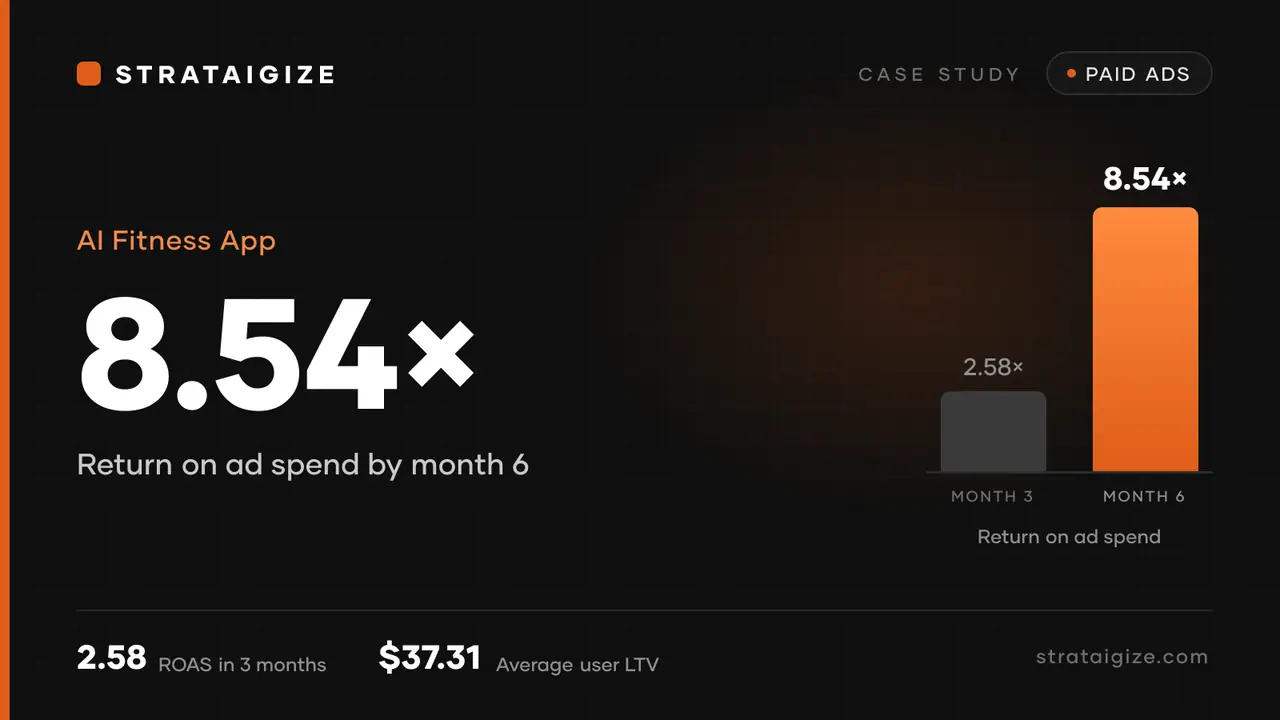 8.54ROAS in 6 months
AI
How an AI Fitness App Achieved 8.54 ROAS with Strataigize
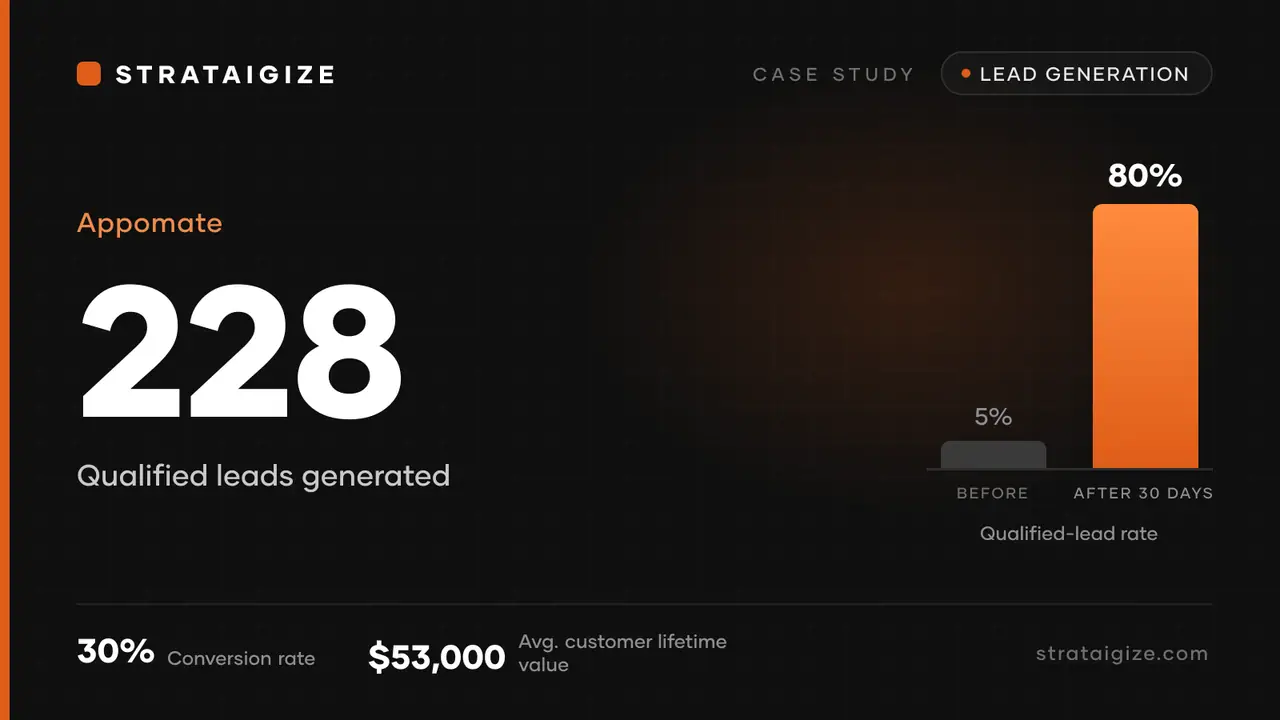 5% to 80%Qualified share of leads, in 30 days
Appomate
Appomate: From 5% Qualified Leads to 80% in 30 Days

Analytics & Tracking, answered.
Why do Meta, Google and GA4 all report different numbers?
They use different attribution windows, models and event sources. We check the conversion definitions, missing or duplicate events and consent settings, then explain remaining differences rather than force totals
What is a Conversions API and do we need one?
A Conversions API sends permitted events from your server to an ad platform. It can supplement browser tracking, but does not bypass consent or guarantee complete attribution. We have built integrations for Meta, TikTok, X and LinkedIn; the right setup depends on your data
Can you fix tracking without touching our site?
Tag changes go a long way. A server event and a clean click ID usually need a small change in the site or the CRM. We scope
What does this cost?
Website optimization starts at $4K per month with a typical range of $4K to $10K, published on our pricing page. A one-off measurement rebuild can also be scoped as a
Related services.
AI SEO & Visibility Reporting
A weekly check of ChatGPT, Claude, Gemini, and Google. Perplexity is
Conversion Rate Optimization
Help more of the right visitors become customers through focused improvements to your website and
Search Engine Optimization
People find you in search. The pages, the words, and the technical fixes sit with
Technical SEO
Find and fix crawl, rendering and performance problems, then verify the changes on the
Ecommerce SEO
Search work for the collection and product pages that carry margin. The problems that hide those pages get
Growth consult
A free 30-minute conversation with a founder. Discuss the work you need and leave with the next