The Best ASO Tools to Grow Your App
The best ASO tools in 2026 are AppTweak for keyword research and competitive intelligence (Essential $99 monthly or $79/month billed yearly), Sensor Tower for market data now that it has absorbed data.ai, App Radar by SplitMetrics for beginner-friendly optimization, Astro for indie iOS developers, and AppFollow for review management. Pair one keyword platform with a creative testing tool and a review monitor, then judge every tool by the organic installs it
Top ASO Tools for 2026
App store optimization (ASO) tools earn their keep on one number: organic installs. Everything else supports that number. Judge the shortlist below on that basis, and buy the smallest set that covers keywords, creative, and reviews. That is the baseline. Buy only what you will use. Start with the built-in
App Radar (by SplitMetrics), Excellent for beginners: intuitive interface, metadata tools, and AI-assisted optimization. SplitMetrics acquired App Radar in late 2023, and it still operates under the App Radar name as
Apptopia, Forecasts business-critical KPIs, tracks ad intelligence, and provides
ASOdesk, A full ASO ecosystem covering app promotion, review management,
Astro, Simple yet powerful, backed by Apple Search Ads popularity data. A native Mac app for iOS developers, sold as a flat $108 per year as
Sensor Tower, Popular for precise keyword rankings and market analytics across both app stores. It acquired data.ai (formerly App Annie) in March 2024 and absorbed its data into
| Tool | Best For | Key Strength |
|---|---|---|
| AppTweak | Agencies & pros | Atlas AI research, multi-country tracking ($99 monthly or $79/mo billed yearly, checked September 5, 2026) |
| Sensor Tower | Enterprise teams | Market intelligence, now includes data.ai |
| App Radar (SplitMetrics) | Beginners | Guided ASO plus Apple Ads automation |
| ASOdesk | Growth teams | Full ASO + review management suite |
| Astro | Indie iOS developers | Apple Search Ads data at a flat $108/year |
| AppFollow | Support & ASO teams | Review management and alerts |
Built-In App Store Platforms
Here’s where most
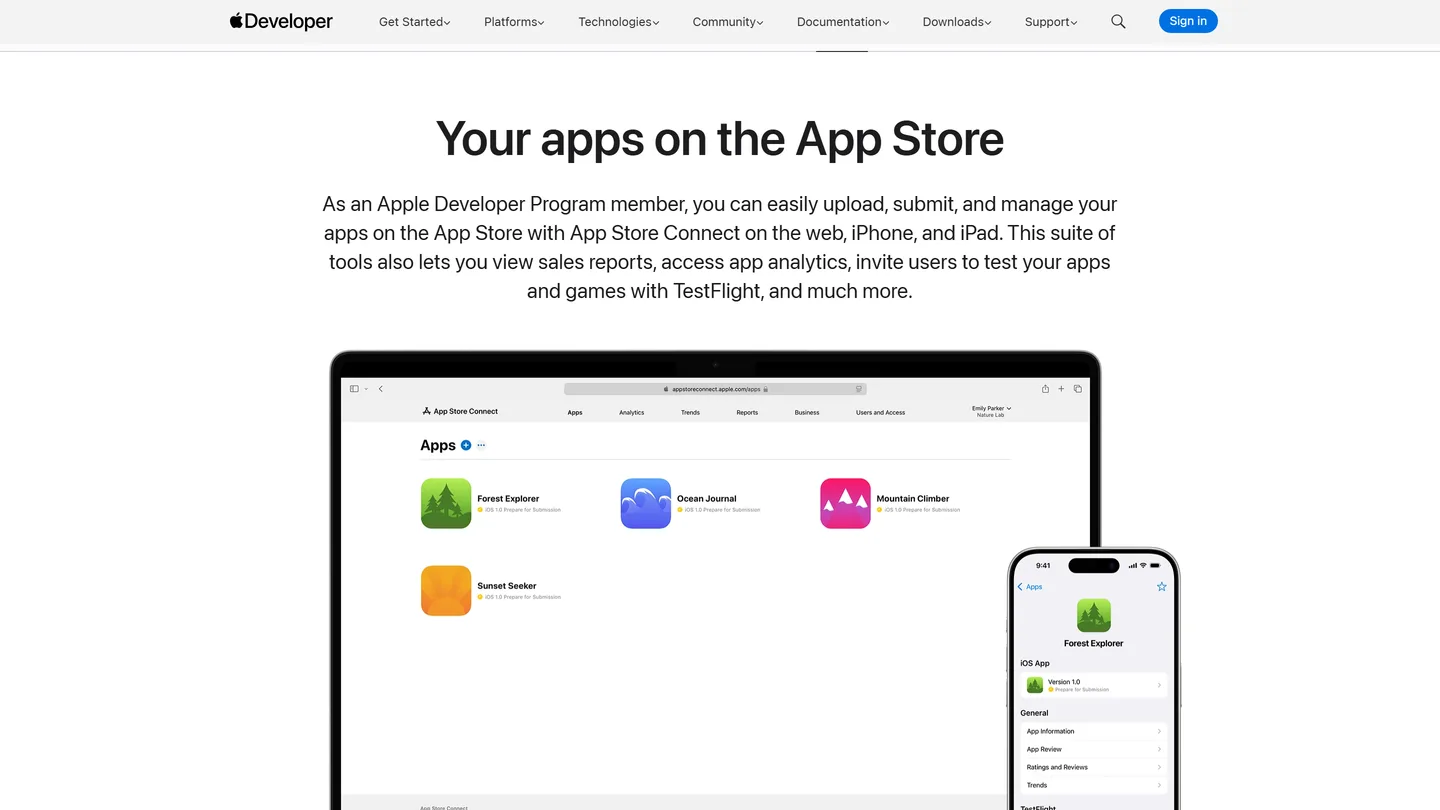
1. App Store Connect (Apple)
Apple’s dashboard
- Track impressions, page views, and downloads
- Run A/B tests with Product Page Optimization
- See how conversion rates vary by country, source, or device
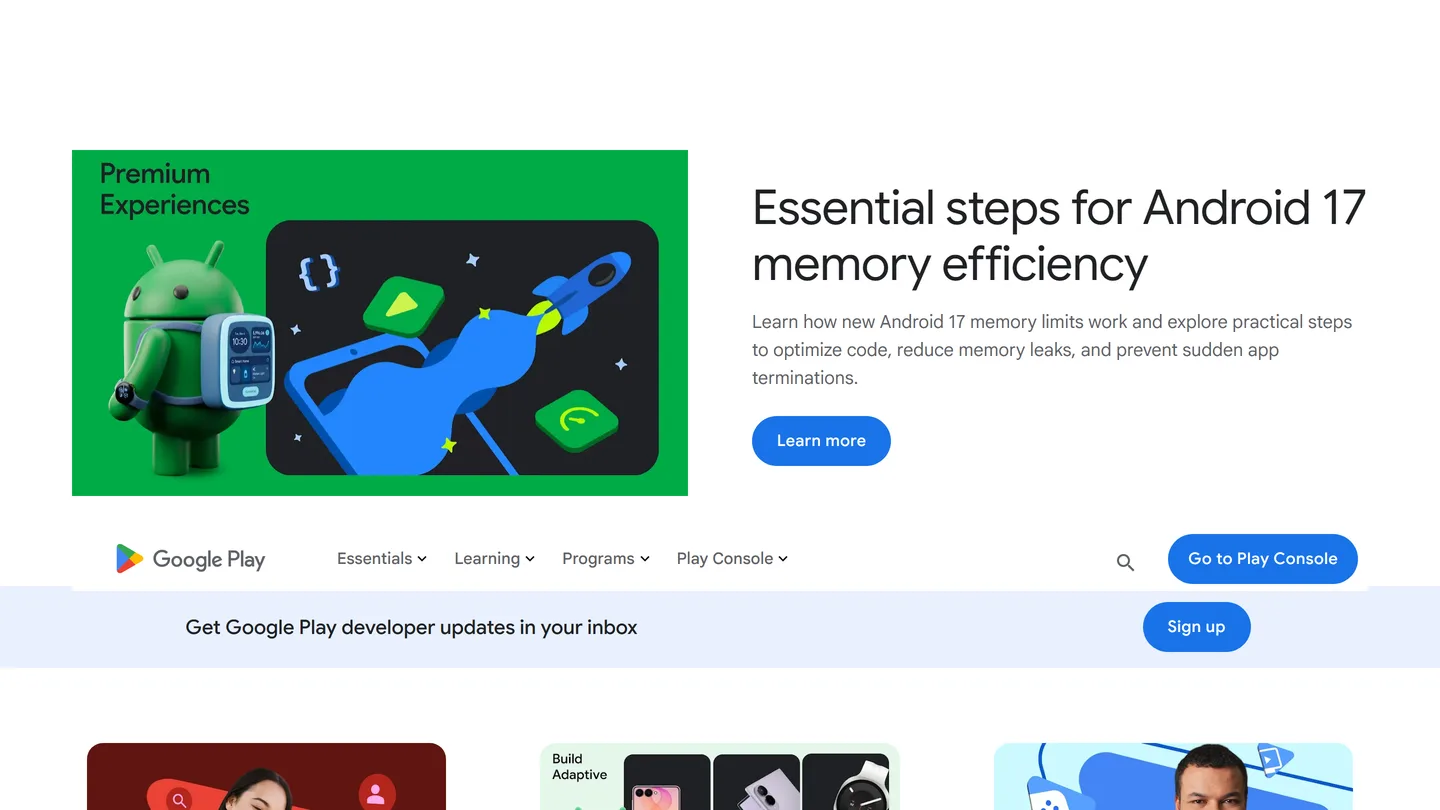
2. Google Play Console (Android)
For Android apps, this is your go-to.
- Track keyword performance
- Create custom listings for different regions
- Monitor stability with Android Vitals
Google Play’s Store Listing Experiments let you A/B test icons, screenshots, and descriptions directly in the console. Start there. Google’s documentation walks through running them with proper
Keyword & Competitor Tools
Keywords come first. Competitors
3. AppTweak
Used by big names like Activision, Bumble, and Canva.
- Keyword difficulty, search volume, and Atlas AI relevancy insights
- Competitor metadata comparisons
- Market intelligence for different countries
Essential is $99 on monthly billing or $79/month billed yearly, checked September 5, 2026. For the full plan breakdown, read our AppTweak overview.
4. Sensor Tower
Great for enterprise-level insights, especially since it absorbed data.ai (formerly App Annie) in 2024:
- App visibility scores
- Top chart tracking
- Store intelligence by industry
You might be interested: SensorTower
5. App Radar (by SplitMetrics)
ASO meets user acquisition here, with SplitMetrics pairing it alongside its Apple Ads
- Live keyword rankings
- Alerts for sudden performance changes
- Integrates with Apple Search Ads
6. Mobile Action
Popular with app marketing companies.
- Suggested keyword lists
- Competitor strategy snapshots
- Store visibility graphs
For a free starting point before committing to paid platforms, Answer The Public visualizes hundreds of real search queries from a single keyword, a useful first pass for discovering what your future users
Visual Testing Tools
Creative assets can make or break your
7. SplitMetrics
One of the first tools for testing app
- Multivariate A/B testing
- User behavior heatmaps
- Pre-launch experiments
A historical listing to check: Storemaven / Mavens
Zynga acquired Storemaven in September 2022. A G2 seller profile remains online, but that alone does not establish a current standalone product you can purchase. We could not verify a current public offer. For a new test, compare SplitMetrics Optimize with Apple’s Product Page Optimization and Google Play’s store listing experiments. See our updated comparison for the
Review & Sentiment Tools
Ratings and reviews matter for ASO. These help you stay on top
9. AppFollow
- Monitor and respond to reviews across different countries
- Sentiment analysis dashboard
- Slack and CRM integrations
10. Appbot
- AI groups reviews by theme (bugs, design issues, etc.)
- Flags emerging problems fast
- Shows how review scores impact your ASO
Analytics & Attribution Tools
Know your numbers and
11. Appfigures
Data.ai (formerly App Annie) no longer exists as a standalone product: Sensor Tower absorbed it in 2024. For affordable app analytics, Appfigures fills
- Track rankings, downloads, and revenue across both stores
- Monitor reviews and set performance alerts
12. Adjust / Branch
- Track your ad campaign performance
- Deep linking analytics
- Cross-channel lifetime value insights
The Features That Separate a Professional Tool From a Rank Tracker
Three capabilities matter in 2026. Start with intent-aware keyword analytics. Volume without intent classification fills your shortlist with terms you will never win. Competitor monitoring matters too. A rival’s metadata change or creative refresh should reach you as an alert, not as a surprise in next month’s numbers. Review sentiment is the third. Apps taking in thousands of reviews a month cannot read them by hand, and Google’s ratings guidance links review analysis and replies to stronger ratings. A tool missing any of the three is a rank tracker with
Choosing the Right ASO Tool for Your Business
The selection process should align with your app’s current stage, growth goals, and
For Solo Developers ($0-500 monthly budget)
Primary Need: Keyword research and basic
Recommended: Appfigures, ASO World, or Astro (a flat $108
Focus Areas: Keyword difficulty assessment and competitor
For Growing Startups ($500-2,000 monthly budget)
Primary Need: Comprehensive optimization and
Recommended: Sensor Tower or
Focus Areas: A/B testing store listings and organic user
For Established Apps ($2,000+ monthly budget)
Primary Need: Advanced analytics and
Recommended: Sensor Tower (which now includes data.ai) or custom
Focus Areas: Market expansion and category
Teegan Johnson, Founder & CGO at Strataigize, emphasizes the importance of tool selection: “The right ASO tool should feel like an extension of your growth team, not another dashboard to check. We often see clients get better results with mid-tier tools they use consistently than expensive platforms they only
Integration Strategies: Connecting ASO Tools with Your Marketing Stack
ASO results depend on your optimization tools and your wider marketing stack actually talking to each other. Most do not. Three connections carry
CRM Integration
Connecting ASO performance data with customer relationship management systems provides crucial insights into user quality and lifetime value attribution. For a deeper breakdown, see mobile app user acquisition guide.
Analytics Platform Synchronization
Tools like Google Analytics 4 and Firebase should receive ASO data to enable full-funnel attribution modeling from keyword impression to
Marketing Automation Workflows
Advanced teams integrate ASO insights into marketing automation platforms to trigger campaigns based on keyword ranking changes or
Common ASO Tool Mistakes to Avoid
The pitfalls below are the ones we keep meeting in
Over-Reliance on Keyword Volume Data
Many teams chase high-volume keywords alone. Intent and competition get ignored, and the shortlist fills up with terms the app will never win. The most successful apps often rank for hundreds of long-tail keywords that collectively drive more qualified installs than single
Ignoring Localization Opportunities
Apps that only optimize for English-language markets leave their largest untapped audiences on the table. Localized listings convert measurably better: apps localized across ten or more markets see 35 to 50% higher conversion than single-market apps, with localized screenshots alone adding 5 to 15%, per Appalize’s 2026 benchmarks.
Tool Fragmentation Without Integration
Using multiple specialized tools without connecting their data creates blind spots
How We Run the Stack Ourselves
The team at Strataigize, one of the top app marketing agencies in Canada, shares their
“For mobile games, it’s all about timing, creative testing, and smart keyword choices,” they shared. “We focus on every part of the funnel, from getting players to notice the game, to actually hitting download, to keeping them
Our own working stack: AppTweak for keyword and competitor intelligence, the stores’ native A/B testing for creative, and a review monitor wired into Slack. For what that looks like against published numbers, the Kleo engagement rebuilt one listing’s words and visuals and lifted downloads 127% in
You can use our ASO audit tool to assess what your app listing
ASO Tool ROI: Measuring Success in 2026
Measure the tool on the same number you measure the channel on. The primary read is organic install attribution: which keyword and listing changes drove actual downloads, not just ranking movement. Behind it sit ranking velocity on your target terms (metadata changes typically show movement within a few weeks) and store-listing conversion, where the stores’ own A/B tests tell you which elements earn the install. The advanced reads, once those are in place: whether ASO-acquired users retain and monetize differently from paid ones, how your organic visibility moves against the category leaders, and how a change in one store echoes in
“Success requires choosing tools that align with your app’s specific growth stage and monetization model,” notes Ian McGavin, Founder & CMO
Specialized ASO Tools for Specific Use Cases
Beyond comprehensive platforms, several specialized tools excel in
For Gaming Apps: GameRefinery
Gaming apps have unique ASO requirements around seasonal events, character updates, and genre-specific keywords. GameRefinery provides gaming-focused competitive intelligence that general ASO
- Understanding successful game mechanics across top titles
- Monitoring competitor special events and seasonal campaigns
- In-app purchase strategies and pricing analysis
For E-commerce Apps: Yotpo Reviews Intelligence
E-commerce apps need deep review analysis to understand product-specific feedback and shopping
- Extracting specific product feedback from app reviews
- Identifying commercial keywords that drive purchases
- Understanding peak shopping periods and keyword demand
For B2B SaaS Apps: Apptopia Enterprise
B2B apps require different keyword strategies and competitive analysis focused on decision-maker search behavior rather than consumer trends. For execution support on the paid side of that motion, see who should run Apple Search Ads and the Apple Search Ads service.
The Future of ASO: Emerging Trends and Technologies
The near-term shift that matters is AI-answer discovery: assistants now recommend apps inside generated answers, and the ASO vendors are racing to track it (AppTweak’s AI Visibility reporting is the first mover covered in our AppTweak review). Privacy is the other durable force: tools keep moving toward aggregate and store-side data that needs no personal identifiers, which is why store-native A/B testing and first-party analytics keep gaining weight in every
The Tool Is a Multiplier, Not the Strategy
ASO tooling in 2026 is good enough that the tool is rarely what holds an app back. The work is. For app founders and marketing teams the buying list is short: AI-assisted keyword research, competitive intelligence you will read, and a platform that connects to the marketing stack you
Success takes more than tool selection. The apps that hold the top of organic search pair good tools with people who know what to change, and with the discipline to keep changing it. With a broad platform like Sensor Tower or a narrower one like ASO World, what separates the results is whether anyone acts on the data
ASO tools are multipliers, not magic. They make a well-planned optimization effort go further, and they tell you when app store algorithms or your competitors have moved. They will not write the plan
Strataigize has helped app founders and SaaS brands across Canada, the US, and Australia drive measurable growth through data-driven mobile marketing, ASO, and paid acquisition strategies. Our team combines expertise in app store optimization with access to enterprise-level ASO tools to deliver increased organic visibility, higher-quality user acquisition, and sustainable
The case studies show the published numbers, page by page, or book a strategy call to discuss your specific ASO goals. For the strategy side of the same job, see our app store optimization service.
Frequently Asked Questions
What’s the minimum monthly budget needed for effective ASO tools in 2026?
AppTweak’s Essential plan is $99 on monthly billing or $79/month billed yearly, while Astro is $108 per year. AppTweak Grow and Grow Plus cost $359 and $659 on monthly billing. Sensor Tower requires a quote and should not be assigned the same price band. Start with the built-in store tools, then pay for the specific keyword, testing or review workload you cannot cover
How long does it take to see results from ASO tool implementation?
Most apps see initial keyword ranking improvements within 2-4 weeks of implementing ASO tool recommendations. However, meaningful organic install growth typically requires 6-8 weeks as app store algorithms need time to recognize and reward optimization changes. Apps with strong existing foundations may see faster results, while new apps often require 3-4 months to build sufficient authority for competitive keyword rankings. For a deeper breakdown, see app store optimization services guide.
Should I hire an ASO agency or use tools internally?
This depends on your team’s expertise and available time. Tools alone provide data and insights, but interpreting that data and executing optimization strategies requires specialized knowledge. Many successful apps use a hybrid approach: internal teams handle day-to-day monitoring while ASO agencies manage strategy and complex optimizations. If your team lacks ASO experience or is already stretched thin, working with an ASO agency often delivers better ROI than tool
How do I measure the ROI of ASO tool investments?
Track three primary metrics: organic install attribution (which optimizations drive actual downloads), keyword ranking improvements for target terms, and conversion rate changes in your app store listings. Then price the result the simple way: compare what an organic install effectively costs you (tool plus time) against what you pay for the same install through ads. When the organic number is a fraction of the paid one, the subscription has justified itself, and that comparison is one your finance team will accept without
What’s the difference between ASO tools and ASO agencies?
ASO tools provide data, insights, and optimization recommendations, but require internal expertise to interpret and implement effectively. ASO agencies combine tool access with strategic expertise, hands-on optimization, and ongoing campaign management. Tools are more cost-effective for experienced teams, while agencies provide better results for companies lacking internal ASO knowledge or bandwidth. Many apps benefit from a hybrid approach using both tools and
How do ASO tools handle iOS vs Android optimization differences?
The best ASO tools recognize that iOS App Store and Google Play have different ranking algorithms, keyword limits, and user behaviors. Leading platforms like Sensor Tower and AppTweak provide platform-specific recommendations for keyword density, character limits, and creative optimization. iOS typically requires more focus on exact keyword matches, while Google Play allows for more semantic keyword variations and longer descriptions. Choose tools that provide separate optimization strategies for each platform rather than
Learn how these tools fit into a full ASO strategy in our ultimate ASO guide.
Where to Go Next
- The plan-level breakdown of the tool we shortlist most: AppTweak pricing and plans
- The market-intelligence side of the stack: app intelligence tools in 2026
- How to test the creative these tools point you at: the ASO creative testing playbook
- The service behind the tooling: app store optimization
Talk