Home / Services / AI systems / Ad optimization systems
Marketing and growth
Budgets moved inside written bounds, every change logged.
An AI ad optimization system reviews your Meta and Google accounts on a schedule, confirms the date range and attribution window before it judges a number, moves budgets by bounded steps, and escalates anything outside its authority to a person. It runs our client accounts every day.
Who it is for
Built for the team that does this by hand.
Brands spending $25,000 a month or more across Meta and Google
In-house media teams who want nights and weekends covered without handing over control
Agencies that want a written optimization policy instead of a buyer's mood
What it does
Ad optimization systems, by the job.
Verifies the window first
No number is judged before its date range and attribution window are confirmed, because recent days under-report and keep maturing for a week. The system states both with every recommendation.
Moves budgets by bounded steps
Increases and decreases are capped per step and per day in a policy you sign. A campaign that clears every performance gate still cannot exceed its bound.
Never turns ads off
Pausing, archiving, zeroing a budget or end-dating a campaign is outside the system's authority at any evidence level. A dead ad becomes a recommendation to a person.
Logs and reverses
Every change is written with its reasoning and is reversible. Anyone on your team can read why a budget moved last Tuesday at six in the morning.
How it is built
The build, in order.
Every system here is scoped as one bounded workflow with a written success metric and a kill threshold agreed before the build. The steps below are the ones specific to this one.
Write the policy
Bounds per step and per day, the gates a change must clear, what is escalated, and the baseline each bound is measured against. Signed before the system touches an account.
Read-only shadow
The system recommends, your buyer decides, and every disagreement is reviewed. It earns write access by agreeing with your best buyer, not by being confident.
Bounded autonomy
Steps inside the bounds execute and are verified after every write. Anything outside them is a proposal with the arithmetic attached.
Weekly post-mortem
Any change a person made by hand between runs is treated as a failure of the system. The run log names the gate that stopped it and what should change.
In production at Strataigize
We run this ourselves.
This is how Strataigize's own client accounts are reviewed on nights and weekends. The optimizers run inside written bounds, verify the attribution window before every judgement, log every change, and are forbidden in code from pausing delivery. When a person has to make a change by hand between runs, the run log records it as a failure of the system and names the gate that stopped it.
Governance
What a person still approves.
- Budget steps are capped in a policy you sign, and the system cannot widen its own bounds
- Pausing or removing anything is outside its authority at any evidence level
- Every change is logged with its reasoning and reversible, and platform access is client-granted and revocable
The rest of the posture is published on trust and security: client-granted access you can revoke, credentials in managed stores, an AI governance summary aligned to the NIST AI Risk Management Framework, our subprocessors, and a DPA on request. We do not hold SOC 2 and we say so there.
Price
Published, not gated.
Runs inside our paid media retainers (from $6,000 per month), or as a standalone build at $25,000 to $60,000 fixed. Every AI build starts with a $7,500 AI Opportunity Audit over two weeks that is credited toward the build if you proceed, and a pilot is one bounded workflow on your real data over 30 to 90 days with a written success metric and a kill threshold. Ad spend is separate and billed by the platforms; we manage from $25,000 per month in media.
The full price list is on the pricing page, and the cost drivers, with the questions that expose a padded quote, are in how much AI agents cost in 2026.
Case studies
The work behind it, documented.
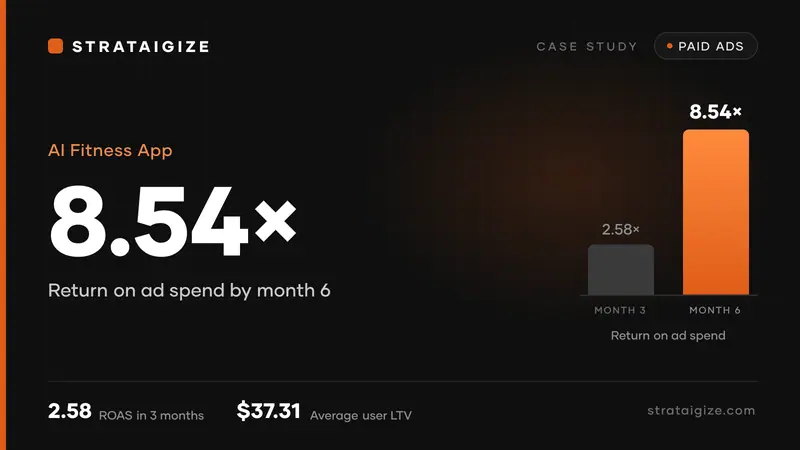
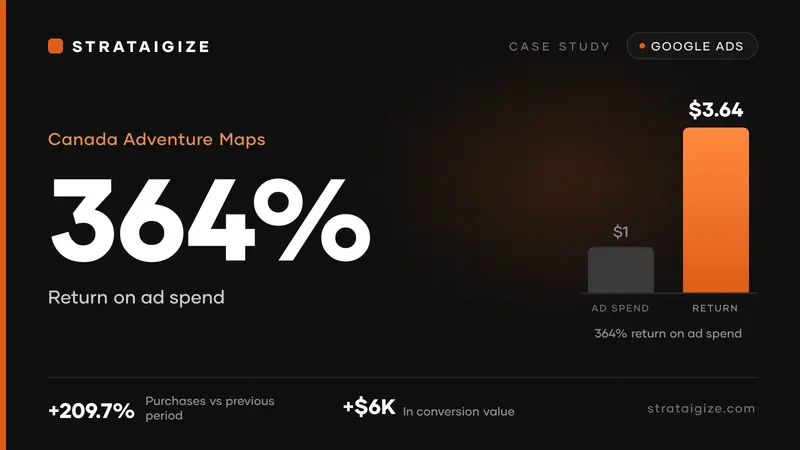
Questions
Ad optimization systems, answered.
Do we still need a media buyer?
Which ad platforms does it cover?
Can it run on our accounts if we keep our agency?
Related
Where this connects.
Paid advertising · AI workflow automation · Client reporting automation
The other systems in the catalogue: lead qualification agents, outbound sales agents, customer support agents, document processing agents, internal knowledge assistants, client reporting automation, content engines, computer vision systems, mcp servers and agent-callable surfaces, always-on operations agents.
Teams that hand us the number







Runs inside our paid media retainers (from $6,000 per month), or as a standalone build at $25,000 to $60,000 fixed
Real ranges, published. Ad spend stays in your own accounts.
See the full pricing table →Where this fits: see the Strataigize Growth System, the ladder every engagement runs on.
Talk to the build team about ad optimization systems
Name the workflow you want it to run and we reply within 24 hours with whether it is a fit, the bounded scope we would propose, and the payback math.
Start with one workflow.
A free 30-minute audit call with the senior team names the workflow this system should run first and what it should cost, whether you build it with us or not.
Book your growth audit →Canadian and looking at funding? How the BDC LIFT program works. Public sector? How we build for government.
Rated 5.0 on Clutch