
Players Came for the Contests. They Stayed for Each Other.
Most mobile games buy their growth twice. They pay to acquire a player, the player leaves within a week, and they pay to acquire a replacement. This game, a real-time prediction game built around live sporting events, grew to 150,000 monthly active users without falling into that loop, and the reason was a
The team came to us with a game that had real mechanical strengths: live predictions, a secure reward system, fast payouts. What it did not have was a story that led with any of them, or a plan for what players would do between contests. Marketing and product were pulling in different directions, which in practice means marketing pays for players the product
What We Changed
We made the live features the headline. The ads had been selling a game. We rebuilt the creative and the influencer briefs, worked with sports-focused creators, and sold the three things a rival could not copy by next quarter: predictions resolving in real time, payouts arriving fast, and a leaderboard full of other people. Campaigns on social showed how quickly a new player could enter a live contest and
We pushed for chat inside every contest. The riskiest recommendation here was not an ad tactic. It was telling a development team mid-roadmap that each contest needed its own chat room, so players could trade predictions and argue about outcomes. Social features are slow to build and impossible to A/B test halfway. The team built it anyway. If your growth partner never asks you to change the product, you have bought
We turned player behavior into the content calendar. Memorable plays, big wins, and the stories players told about themselves became the social feed. The product team kept analyzing contest formats, reward structures, and leaderboard displays, and shipped refinements on a
What Happened
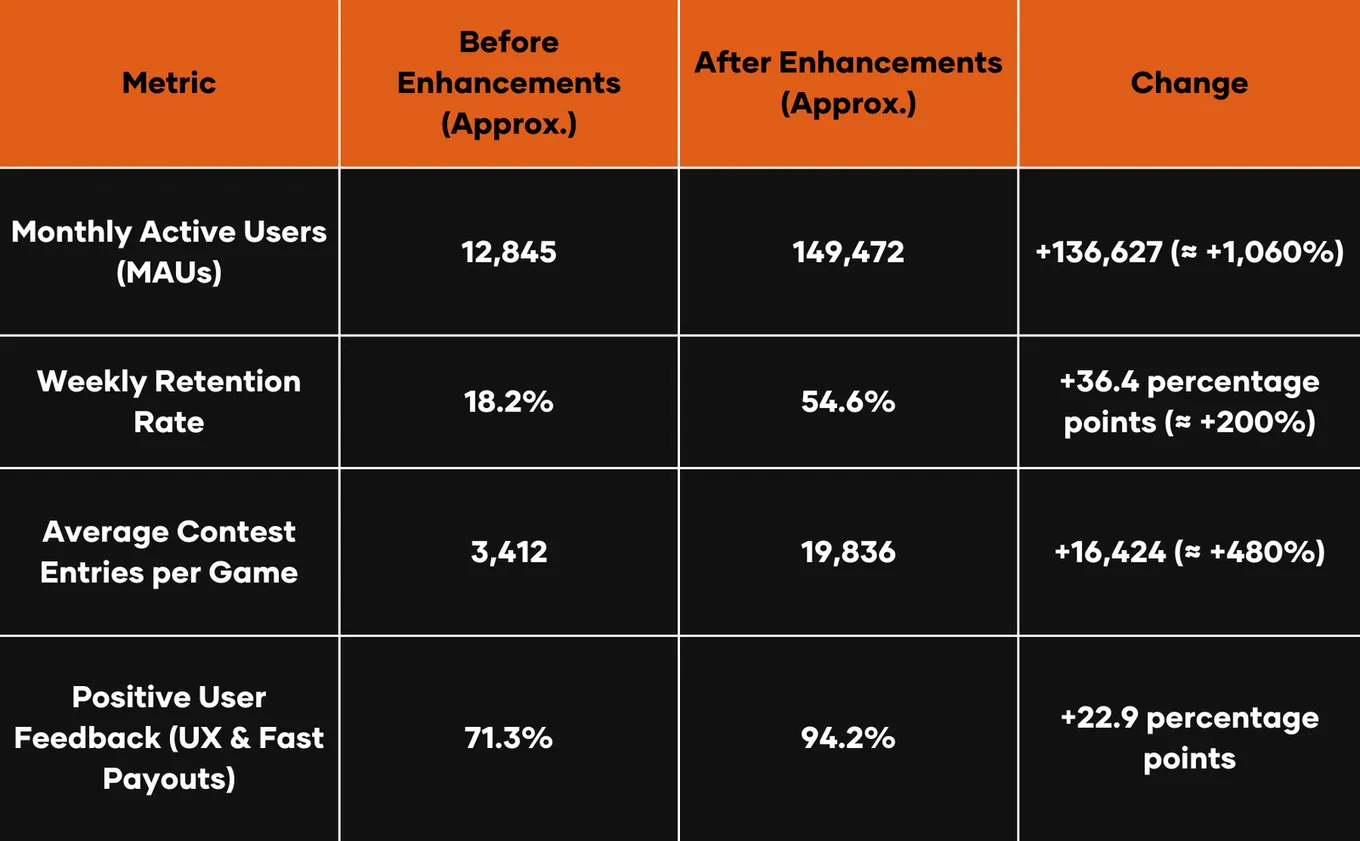
The game reached 150,000 monthly active users. Weekly retention rose 35% after the live chat, quick picks, and frequent contests shipped. Contests now draw about 20,000 entries per game, and the feedback that keeps coming back is about the same three things the marketing leads with: the experience, the fast payouts, and
“Strataigize’s product improvements and marketing strategy propelled our user growth and transformed the experience for
our players.” Founder and CEO of the
game studio
One caveat: these are level and trend numbers. The retention lift landed in the same period the community features shipped, which is why the team kept investing there, but nobody ran a version of this game without chat to
The Part Worth Copying
If your app loses people after the first week, the cheapest lever is rarely another feature; it is making the players visible to each other. A leaderboard and a chat window did more for this game’s retention than anything else it shipped that year, and unlike a media budget, a community is not something a competitor can buy their way past. The industry page for that work is mobile game marketing.